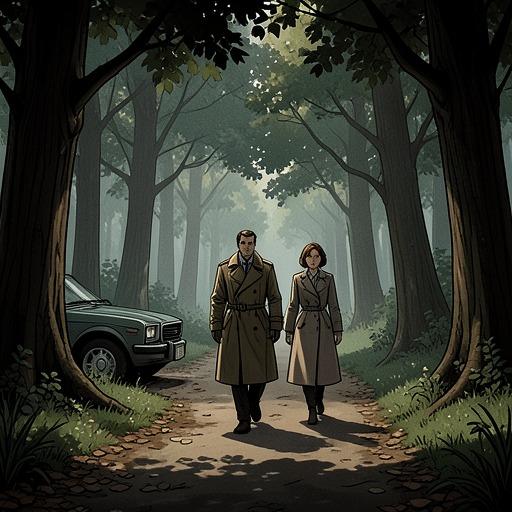
Gerry Wade's death
The Seven Dials MysteryGerald Wade’s death begins as an apparently straightforward tragedy: he is found dead in his room, with chloral, a bottle, and a glass beside the bed. That explanation is gradually undermined by his friends’ reactions, an unexplained clock thrown out of the window, and a letter warning Loraine Wade away from Seven Dials. The later revelation that Jimmy Thesiger murdered Wade turns the supposed overdose into the first concealment in a larger conspiracy.
Discovery and First Reactions
When Wade has not come downstairs, Tredwell sends Williams to his room. Williams returns in agitation, and Tredwell reports that the young man seems to have died in his sleep. Jimmy Thesiger and Ronald Devereux stare at him; Ronald rejects the news as impossible and hurries upstairs, hoping Williams has made a mistake. The shock is sharpened by Jimmy’s sense that Wade’s recent manner had been unlike his usual self, though he struggles to explain what troubled him.
The initial announcement gives no visible sign of violence. Its force comes instead from the contrast between the lively young man his friends knew and the sudden, quiet finality of a death apparently occurring during sleep. Ronald identifies himself as Wade’s greatest friend, making his response more than a formal expression of grief: he insists that the death does not fit the person he knew.
The Medical Explanation and Its Limits
The doctor considers the case apparently simple. Wade had looked healthy, and the chloral found beside his bed, together with a bottle and glass, suggests an overdose. The doctor asks whether Wade habitually took anything to help him sleep. Ronald is astonished by the question and says Wade slept very well and had never complained of sleeplessness. That answer sits awkwardly beside the apparent presence of a sleeping draught, even as the doctor treats the physical evidence as a sufficient explanation for now.
Jimmy asks whether foul play is possible, voicing the suspicion Ronald cannot bring himself to put into words. Ronald answers firmly that there is no cause to suspect it and rejects suicide as well. The doctor is less completely convinced. His assessment remains provisional enough to require an inquest, but the early account encourages the household to understand the death as an overdose rather than an attack. In retrospect, the confidence with which the simplest explanation takes hold is part of the concealment: Wade’s death was murder, carried out by Jimmy and disguised as an overdose.
The Clocks and the Unfinished Letter
That evening, Bundle Brent reconsiders the death. She finds suicide implausible for someone who had seemed so full of life, and initially settles on an accidental overdose instead. Her reasoning does not resolve the evidence; it makes the room’s peculiar details more conspicuous. Seven clocks had stood neatly on the mantelpiece, while the remaining clock was found on the lawn, apparently thrown from the window. Bundle can imagine a servant tidying the clocks, but not why anyone would throw one outside. The displaced clock is a small, concrete disturbance in an otherwise convenient account of an uneventful death.
The unfinished letter Wade wrote to Loraine adds a more serious unease. He says he feels fit and is looking forward to seeing her on Wednesday, then tells her to forget what he said about Seven Dials: what he had thought was a joke, he now says, is not a joke at all, and she should not be mixed up in it. He apologizes, begins to introduce something else, and breaks off because he is too sleepy to continue. The unfinished sentence about Lurcher leaves the letter incomplete, while its warning makes clear that Wade had discovered a danger he did not want Loraine to share.
Significance and Later Reversal
Wade’s death is therefore made legible in two competing ways. At first, the chloral and the bedside glass invite a domestic explanation; the doctor’s judgment and Ronald’s emphatic denial of foul play leave that account largely undisturbed. Bundle’s attention to the clock outside and the contents of the letter reopens the question, linking an apparently private death to Seven Dials. Later, a secret meeting treats Wade’s letter as a matter of concern and asks who found it, confirming that its warning touched the organization’s interests.
The eventual identification of Jimmy Thesiger as Wade’s murderer changes the meaning of the earlier clues without making the initial scene any less carefully misleading. The evidence presented at the death first supports an overdose; the friends’ memories, the unexplained clock, and the unfinished warning show why that account should not be accepted as the whole story. Wade’s death establishes the central pattern of the case: a plausible surface explanation conceals violence, while seemingly incidental details preserve the route toward the truth.